Stop Greenwashing
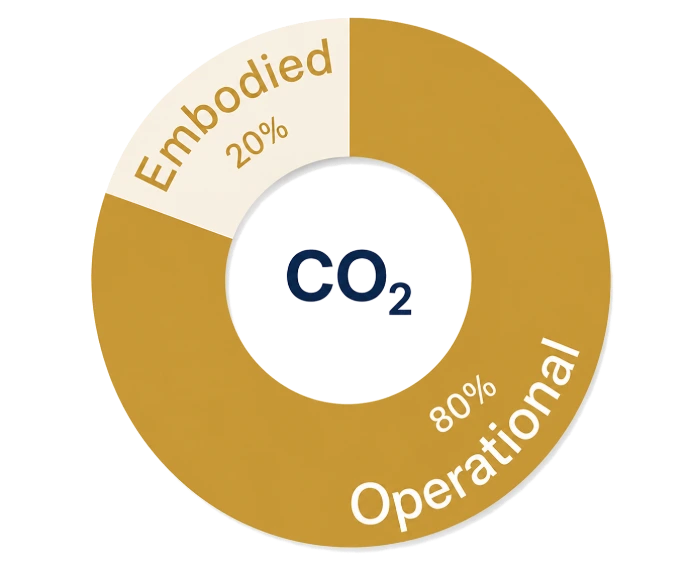
Roughly 20% of a building's CO₂ emissions are linked to the materials used in its construction, the so-called embodied carbon. The remaining 80% comes from the building's operation, primarily the energy required for heating and cooling.
At Fassada, we address both. Our Hybrid® curtain wall technology significantly reduces material consumption and embodied carbon while maximizing building skin performance to reduce operational energy demand. The result is a façade system that delivers measurable sustainability benefits throughout its entire lifecycle.
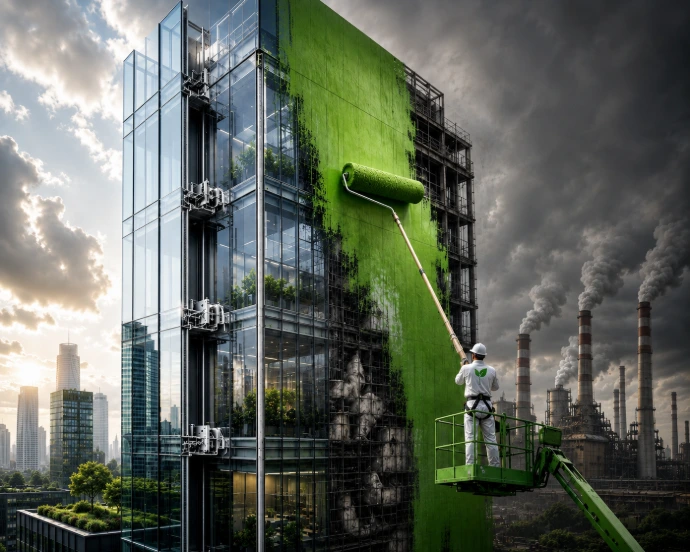
A green façade can hide a dirty truth
Real sustainability is more than skin deep
See Manifest chapter 36-42 for the full story behind Fassada’ s sustainability and circularity
Drastic reduction of CO₂ emissions & energy consumption
Titel boven het beeld
De tekst die het beeld inleidt. Verbergen of links uitlijnen kan in het optiepaneel.
Social: accessible to unskilled or low-skilled workers
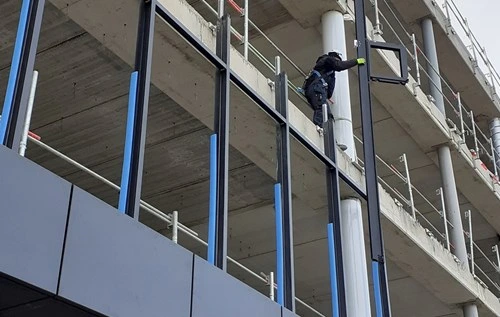
We care not only about the people who will one day live and work in the buildings we help create, but also about the people who build them. That is why Fassada Hybrid® is engineered for simple, safe and intuitive installation. By reducing complexity and minimizing installation risks, the system enables a broader workforce to achieve consistent, high-quality results while improving productivity, safety and job satisfaction.door de eigenlijke inhoud, of voeg er alinea's aan toe.
The best circularity Is no circularity
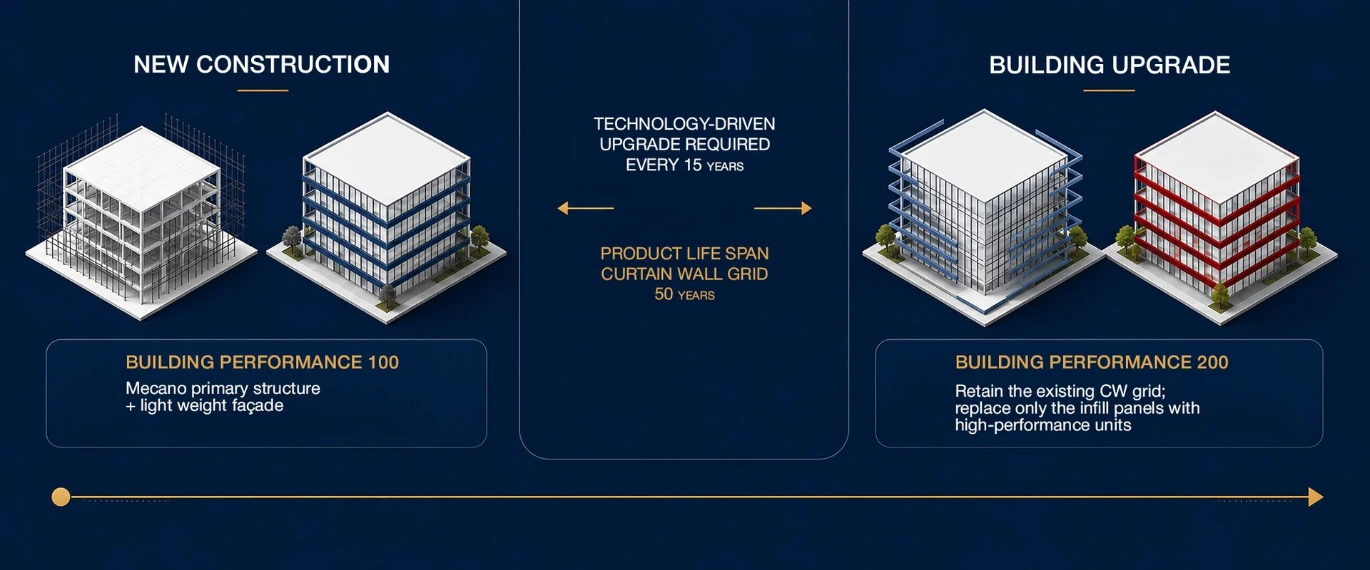
Circularity should not be the ultimate goal, longevity should. The most sustainable products are those engineered to perform for decades, not those designed to be replaced and recycled after a relatively short service life. In many cases, circularity is simply the consequence of limited durability and premature replacement.
Titel boven de kaarten
Korte inleiding. Verbergen kan met het vinkje in het optiepaneel.
A simple example: Porsche 911
The Porsche 911 perfectly illustrates this philosophy. Since its introduction in 1964, more than 1.2 million cars have been built, and around 70% are still on the road today. High-quality products rarely become a circularity issue because they continue to deliver value for generations.
What does this mean for curtain walls?
The same principle applies to façades. A well-engineered aluminium curtain wall structure can easily remain in service for more than 50 years. Glazing, however, evolves much faster. Improvements in thermal performance, solar control, safety and changing regulations typically make glazing replacement necessary after around 20 years. During the lifetime of a building, a façade will therefore require at least two glazing upgrades.
The Fassada Hybrid® Advantage
Fassada Hybrid® is the world's only patented curtain wall system that allows glazing to be replaced entirely from inside the building. There is no need for scaffolding, façade dismantling or disruption to building occupants. The result is faster and more cost-effective upgrades, significantly less waste, lower embodied carbon and maximum long-term value for both the building and its owner.
Built to last. Designed to evolve.
Climate control starts with the façade
The façade is a building's first line of defense against heat gain and heat loss. Superior building skin performance reduces energy consumption, CO₂ emissions and operating costs in one move, which is exactly why Hybrid is designed for the next generation of low-energy, passive and net-zero buildings.
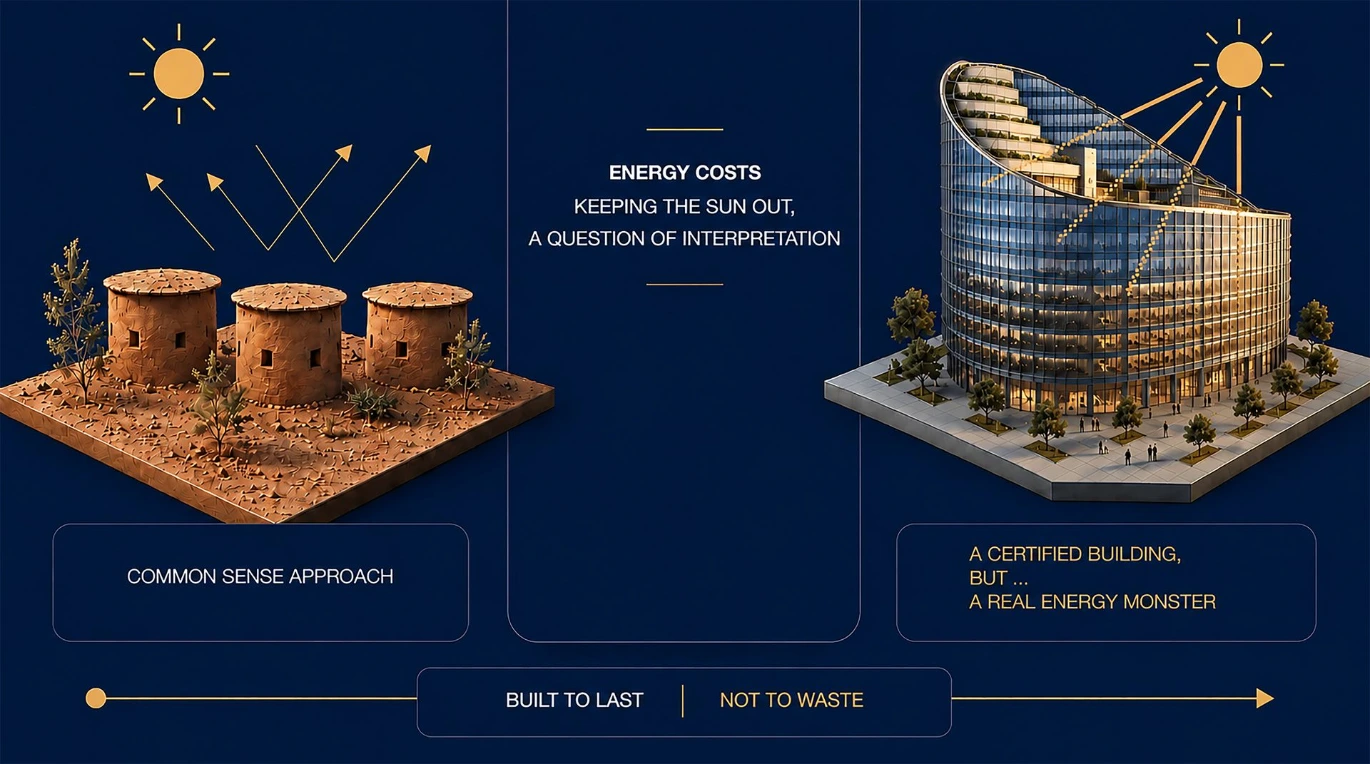
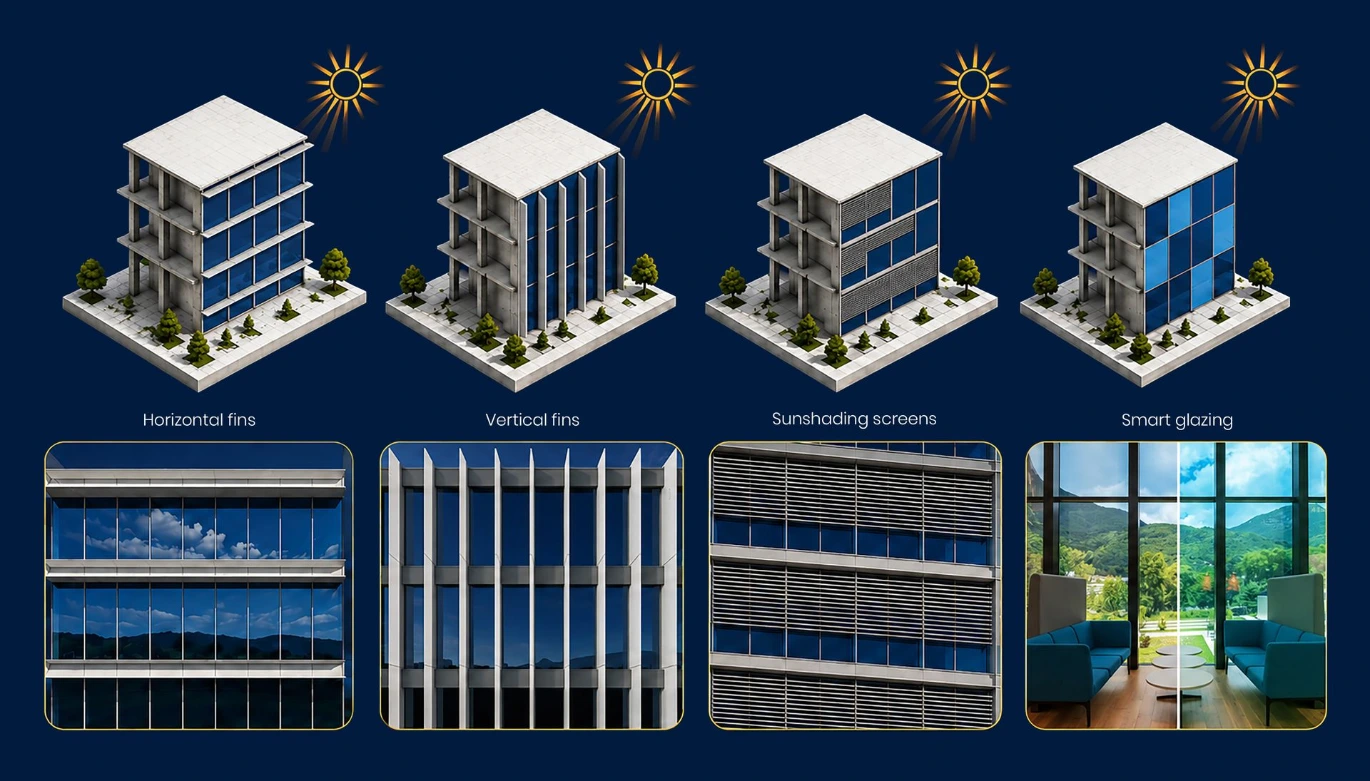
Patented hybrid solutions to stop the sun
before it reaches the glass façade
Titel boven de kaarten
Korte inleiding. Verbergen kan met het vinkje in het optiepaneel.
Ready for the smart glass revolution
Hybrid is the only curtain wall system that allows smart glazing to be installed entirely from the inside. No façade perforations, no silicone, and no cable penetrations through the weather barrier. Just faster installation, easier maintenance, and reliable long-term integration with any Building Management System.
Keep the sun out before it reaches the glass
The most effective solar control has always been external shading, applied before the heat ever reaches the glazing. The Monolithic Mullion® supports any external shading system without a single penetration through the façade: no thermal bridges, no new leakage risks, and a clean, architect-friendly appearance.
The near future
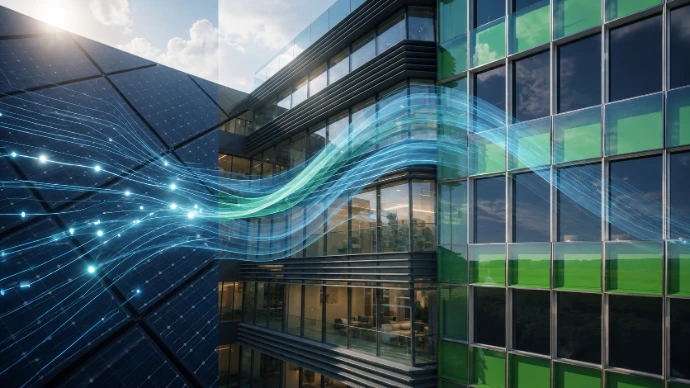
For decades, façades have been designed primarily to separate inside from outside. Fassada believes the building envelope should do far more. It should generate energy, improve indoor comfort and actively contribute to a building's environmental performance, all while delivering these benefits at a lower investment cost than a conventional building with a traditional façade.
Fassada Hybrid® has been developed as a future-ready platform for the next generation of building envelopes. Its structural grid provides the foundation for integrating new technologies without compromising architectural freedom or requiring a fundamentally different façade system.
An intelligent building envelope
The Hybrid platform is designed to support future innovations, including:
Energy generation
Vision glazing and opaque façade panels can integrate photovoltaic technology, transforming the façade into an active source of renewable energy.
Integrated climate control
The structural grid can become part of the building's heating and cooling strategy, reducing HVAC capacity and significantly lowering operational energy consumption.
Living façades
Bio-reactor panels with algae technology have the potential to capture CO₂, produce oxygen and generate renewable biomass, creating façades that actively contribute to a healthier built environment.
These innovations are not separate façade concepts; they represent the natural evolution of the Fassada Hybrid® platform.
The façade of tomorrow is no longer just an enclosure. It is an active, intelligent and sustainable building skin that generates energy, improves comfort and contributes to a healthier environment.
And, perhaps most importantly, it delivers all of these benefits at a lower investment cost than today's conventional buildings with traditional façade systems.